

What is web design?
A term that is very similar graphic design. Unlike graphic design, web design encompasses various skills used when creating websites. Therefore, the difference is that graphic design is primarily based on the design itself, while for the other, besides the design itself, it is necessary to know other elements that build a website such as:
- markup languages (HTML, XHTML and XML)
- Languages for styling (CSS and XLS)
- scripting on computers themselves (JavaScript and VBScript)
- server-side scripting (PHP and ASP)
- databases (MySQL, MSSQL)
- multimedia technologies (Flash, Silverlight)
- Web marketing
- Optimization for search engines (SEO)
- Site Acceleration Techniques, etc.
Concept of responsive web design
When you say web design, then most people think it's making a website. This is partly true, the design of the website is included, but the basic term is a much broader term than the appearance of the site itself.
However, it is necessary to know how to make a website, how to have a good user interface, how to optimize it for search engines, and how to make the site functional for the need for which it was made. Therefore, the design itself is only part of the website in terms of beauty of appearance.
History
1960. – that year
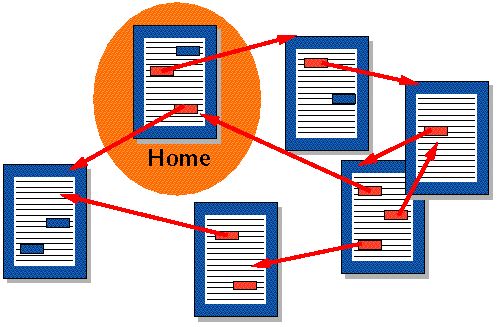
Hypertext – Hypertext was invented in 1969 and is the computer structure of the related units of information. The difference between normal text and hypertext is that hypertext is not read in a row, but is generated dynamically. Also, hypertext is modular, which means that parts can always be added or subtracted. Hypertext as such does not have to form a connected whole.
1980. – and
Internet development – although the idea of the internet was practically created by the invention of hypertext, the real development of the internet has followed since 1983, when ARPANET presented by TCP/IP. It took several years, namely until 1990, when Tim Berners-Lee introduced the World Wide Web.

Around 1992
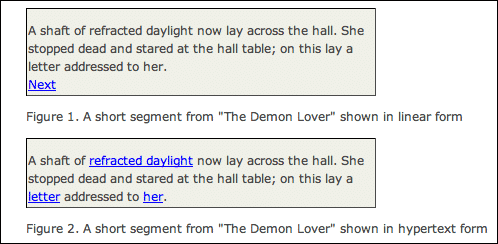
Text design – With the development of the internet in the 1990s, the first websites were made using classic coding, and web brawls were designed using simple text elements with images. The pages were not responsive because mobile technology was only in its infancy.
Around 1996
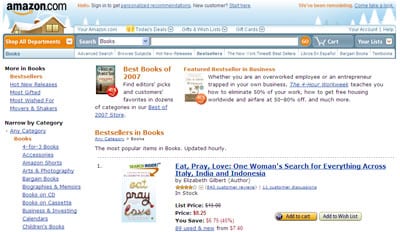
Web design 1.0 – The first websites were made exclusively as static pages obtained by coding. With this generation of designs, the pages were made according to a system of rows, the pages were non-responsive, and the design was such that the pages were stuffed with a lot of information.
Around 2000
Tabulated design – the design did not differ much from the initial design, but the pages started to work on a table-based basis, i.e. they had a clearer structure of rows and tables, primarily to better organise the content of the website.

Around 2006
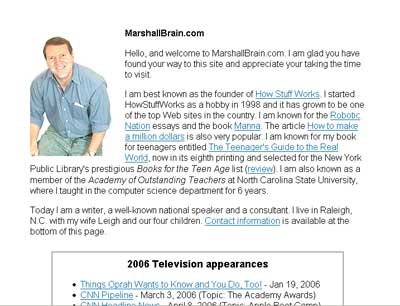
Blog design – The growing development of information, the need for blog pages, and the emergence of pages whose primary purpose was the constant addition of information in the form of blogs. Everything was modified so that the blog came to the fore.
Around 2010
Web design 2.0. was a big turnaround in web design because the pages became responsive, and the design became cleaner, oriented to site visitors and what is characteristic here, the design began to include links to social networks, links, etc. Also included are google folders, video animations and podcasting. The pages became user-friendly and discussions could be done in real time.

2015
Bootstrap – is Toolkit (created in CSS and JavaScript) which enables high-quality, fast and consistent frontend design of the website. Boostrap is actually a set of tools that allow very quick creation of a wide range of various elements of the website. Some of these elements are:
- keys, input fields, tables,
- menus, drop-down elements (dropping menus),
- modal windows, scroll animations,
- tooltips (animated information boxes to further clarify a particular element of the website), icons (Glyphicons)
- various content exchangers (sliders),
- Bootstrap’s most important element: Grid - responsive grid, etc.
2018
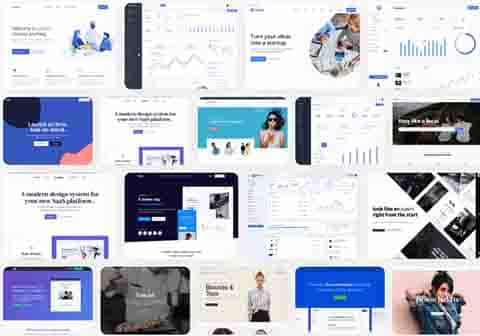
Web Design 3.0. – the idea started in 2016 when 83 Oranges published design trends, but a new type of design occurred one to two years later. Web design 3.0 introduces some new element, the so-called Overlaping, then moves away from the Bottstrap design, the design is “clean”, and large likes are used in the header but also in other parts of the site.
Present and future
At the moment, the appearance of the website is such that the pages are responsive, have large images, and the design is clean with a lot of space around the text and images. However, as an introduction to web design, the appearance of the site itself is not a basic element in the creation of the website, but it is also necessary to make a good SEO, it is necessary to know how to choose colours on the site depending on the topic of the site, but also typography It will fit well on the page. Also today, pages are made so that loading the page is very important for the experience but also automatically for SEO.
How to learn web design what to expect in the future in design is difficult to predict, but what is now known is that content will be increasingly important for the site, but also an experience regardless of which device the site opens from. Whether you are doing your web design business as a freelancer, or you are a web design agency, you will definitely have to constantly monitor design trends to be up to date for potential customers.

 EN
EN  HR
HR  DE
DE